|
||
|
||
|
Wednesday, September 29, 2004
EWTN's Father Echert and a Catholic view of Judaism
Bill Cork has been blogging on several responses by a Fr. John Echert of EWTN, regarding the meaning and value of contemporary Judaism and its relationship to Christianity, which have provoked quite a bit of controversy. Fr. Echert responds to questions posed on the 'Scripture & Divine Revelation' section on EWTN's interactive 'Q&A' online bulletin board, pertaining to "Divine Revelation, especially as found in Scripture, and theology."
It started on Sept. 22nd, when Fr. Echert, responding to an inquiry about the "Hebrew Bible", denied that Jews today had any claim whatsoever to their scriptures, and denounced post-biblical Judaism itself as "a religion of apostasy." Shortly thereafter on Sept. 29th, another individual named James sought to defend the Jews against Fr. Echart's unjust characterization of Judaism, and Fr. Echert again defended himself with examples of what has come to be called -- in the wake of Vatican II -- the "theology of contempt": The Bible and the Tradition are clear: the Temple and Jerusalem were destroyed as a chastisement upon apostate Judaism for its rejection of the Messiah and for the blood of all the innocent, from Abel to Jesus. Our Lord Himself was quite explicit on this matter, as He wept over Jerusalem and warned of her fate. Thereafter, Judaism cannot fulfill its obligations of worship, and the regrouping at Jamnia recast Judaism to something akin to its present form. Furthermore, faithfulness on the part of God to the Old Covenant would mean that if the covenant partner is unfaithful, then God would punish, not continue to reward and bless. Finally, Jesus Himself made clear the sin of the leaders, namely pride, as we read in the fifth chapter of the Gospel of Saint John: "You seek the glory of men; I seek the glory of God." As to Saint Paul, I note that you neglect to quote this text of the letter which immediately precedes your quote: (Romans 11)
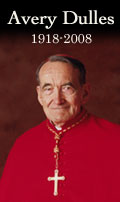
Before I address Fr. Echert's comments, I want to note as well another answer on the same day, in which he expressed the following concern: Jews were the first to be evangelized, by the Lord Himself and then by the Apostles. To claim that we should no longer evangelize Jews is to abandon the great commission of the Lord and the work of the Church, and is an act against truth and charity, for it wrongly assumes that Jews can be saved without Christ and the Church. I understand Fr. Echert's concern, and agree with it completely. It is that which was expressed by many other orthodox Catholics two years ago, in reaction to the document "Reflections on Covenant and Mission", published jointly by The National Council of Synagogues and The Bishops Committee for Ecumenical and Interreligious Affairs, USCCB, which seemed to call for the complete cessation of evangelization to the Jews and a denial of the Church's missionary mandate. This document provoked mixed responses from many Catholic theologicans (such as those expressed in a symposium convened by the National Catholic Register, as well as Cardinal Avery Dulles). It also caused some heated debates between members of 'St. Blog's Parish', especially as embittered "traditionalists" moved beyond mere criticism of the document itself to expressions of anti-semitism towards the Jewish people. I responded to all of this at length in the essay: "Jewish Christian Relations: Mixed Signals from the Vatican". Consequently, Fr. Echert voices a very real and valid concern -- namely, that certain 'progressive' theologians and laity engaged in interfaith dialogue advocate the complete abandonment of evangelization to the Jews in any form; secondly, that they perpetuate the notion that contemporary Jews and Muslims may be saved "without Christ and his Church." (It is interesting to note that, while these assertions are sometimes justified "in the spirit of Vatican II," not only are they mistaken, but they are demonstratably false in light of the specific teaching of Vatican II and the Church on salvation (see for example Dominus Iesus, a reaffirmation of the "salvific universality" of Christ and his Church, thoroughly grounded in Vatican II). However, it is one thing to express such concerns by themselves (as Cardinal Dulles or Fr. Schall have done, in an exemplary manner); it is another to do so with a spirit of condescension and animosity towards the Jewish people by denouncing Judaism as "a religion of apostasy"; or to imply that the Church has assumed complete and rightful possession of he scriptures and that the Jews are no longer entitled to them; that contemporary (post-biblical) Judaism is grounded in "a rejection of the Messiah"; that Jews are in a state of perpetual chastisement; that they are, to quote Fr. Echert, "misled by their proud and wicked shepherds, instead of following the one Good Shepherd." This kind of speech and characterization is bolstered by a selective quoting of scripture -- solely references about Jews which are negative and damning. Just as Fr. Echert criticized 'James' for neglecting to mention certain passages of Paul, he himself conveniently excludes Paul's insistence that God has not rejected his people (Rom. 11: 1-2); or his assurance that "in respect to election, they are beloved because of the patriarchs. For the gifts and the call of God are irrevocable" (Rom. 11: 8-9). Fr. Echert and I could go back and forth on his Q&A board in a trade-off of scriptural passages just as St. Paul himself oscillates in his deliberation of the fate of his people, but my point is this: Fr. Echert's comments perpetuate a teaching of contempt which, in the wake of the Holocaust, Vatican II and Pope John Paul II has firmly denounced and struggled to overcome. Just as the teaching of extra ecclesiam nulla salus should be interpreted in light of the full range of Catholic tradition including Vatican II, one cannot present a biblical view of the Jews w/o taking into account the teaching of Vatican II and the Church's reminder that "God holds the Jews most dear for the sake of their Fathers; He does not repent of the gifts He makes or of the calls He issues" (Nostra Aetate). The Church's teaching on the relationship of Christians and Jews is highly complex and theologically nuanced; it cannot be presented by appeal to scripture alone, but in the developed thought and teaching of the Church up to the present day, and I do not think it can be properly articulated in a few short paragraphs on EWTN's Q&A forum. I recognize the validity of Fr. Echert's concerns about interfaith dialogue and a misleading portrayal of Judaism as a religion sufficient-unto-itself, but so long as those concerns are accompanied by an attitude of contempt and references to the Jewish people specifically condemned by the Church, it will impede a correct (that is to say, full) presentation of Catholic tradition on this issue. Suggested Links & Readings
Labels: jcrelations
|

Against The Grain is the personal blog of Christopher Blosser - web designer
and all around maintenance guy for the original Cardinal Ratzinger Fan Club (Now Pope Benedict XVI).
Blogroll
Religiously-Oriented
"Secular"
|
|













![[Powered by Blogger]](http://buttons.blogger.com/bloggerbutton1.gif)